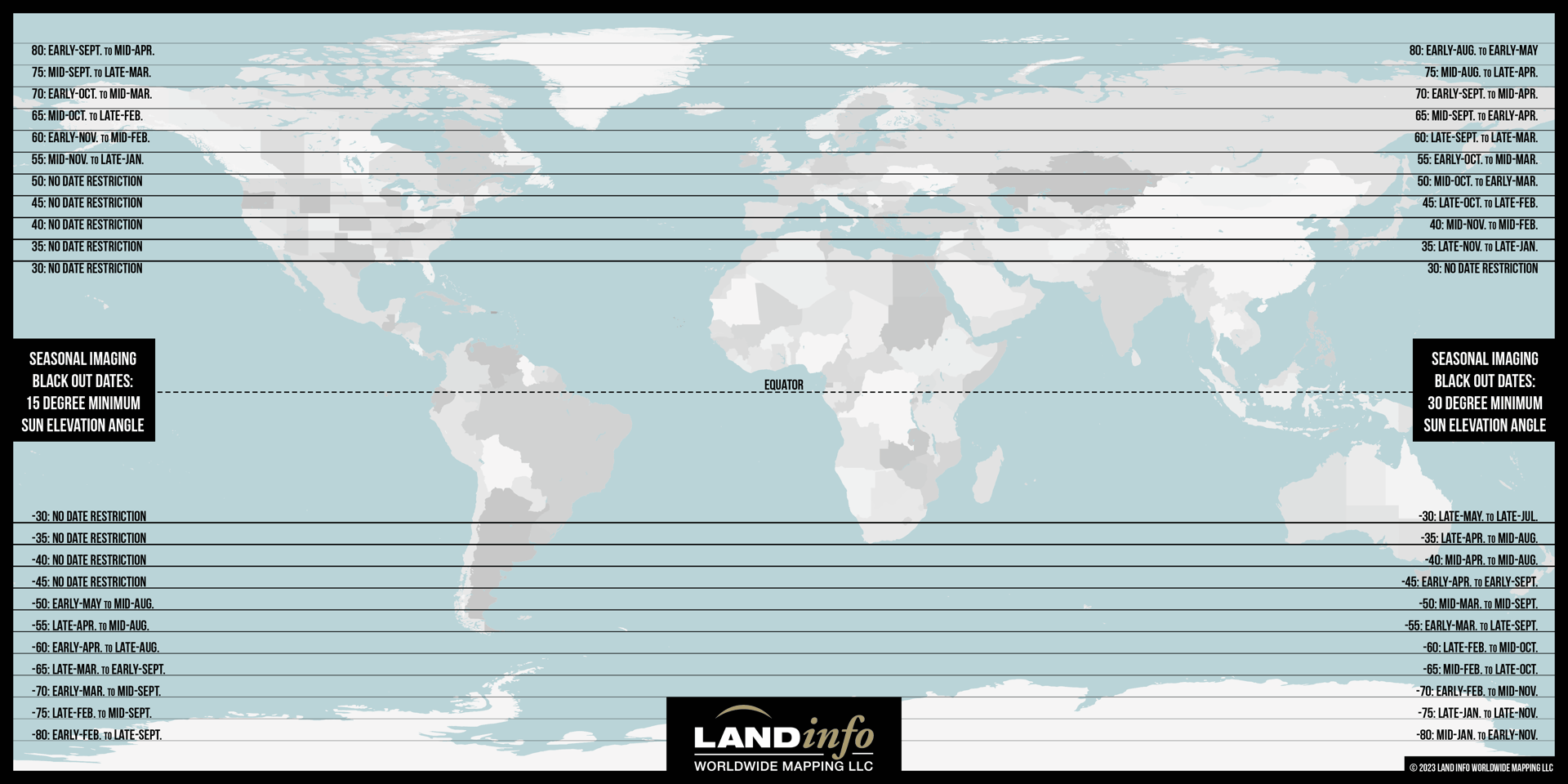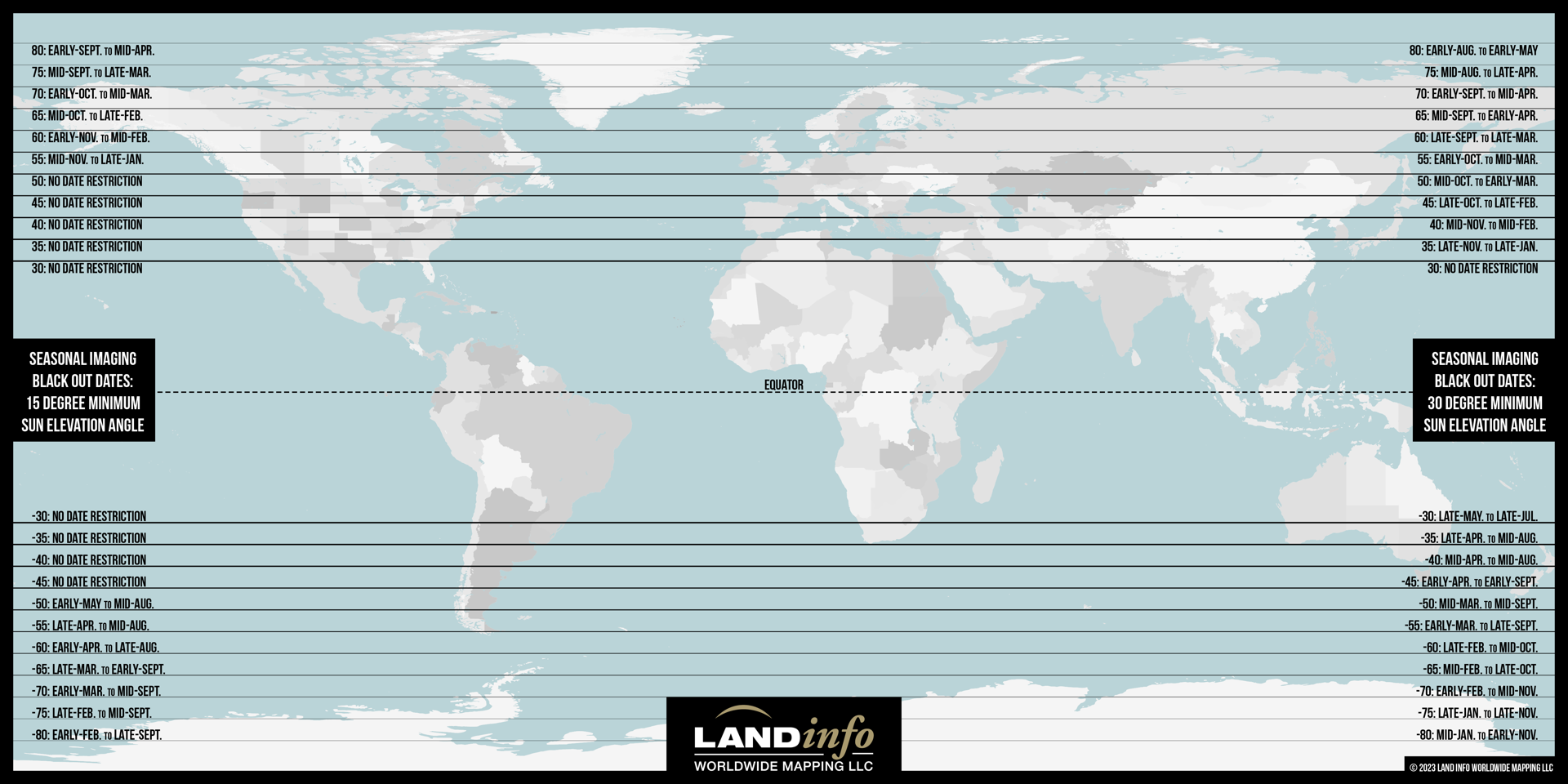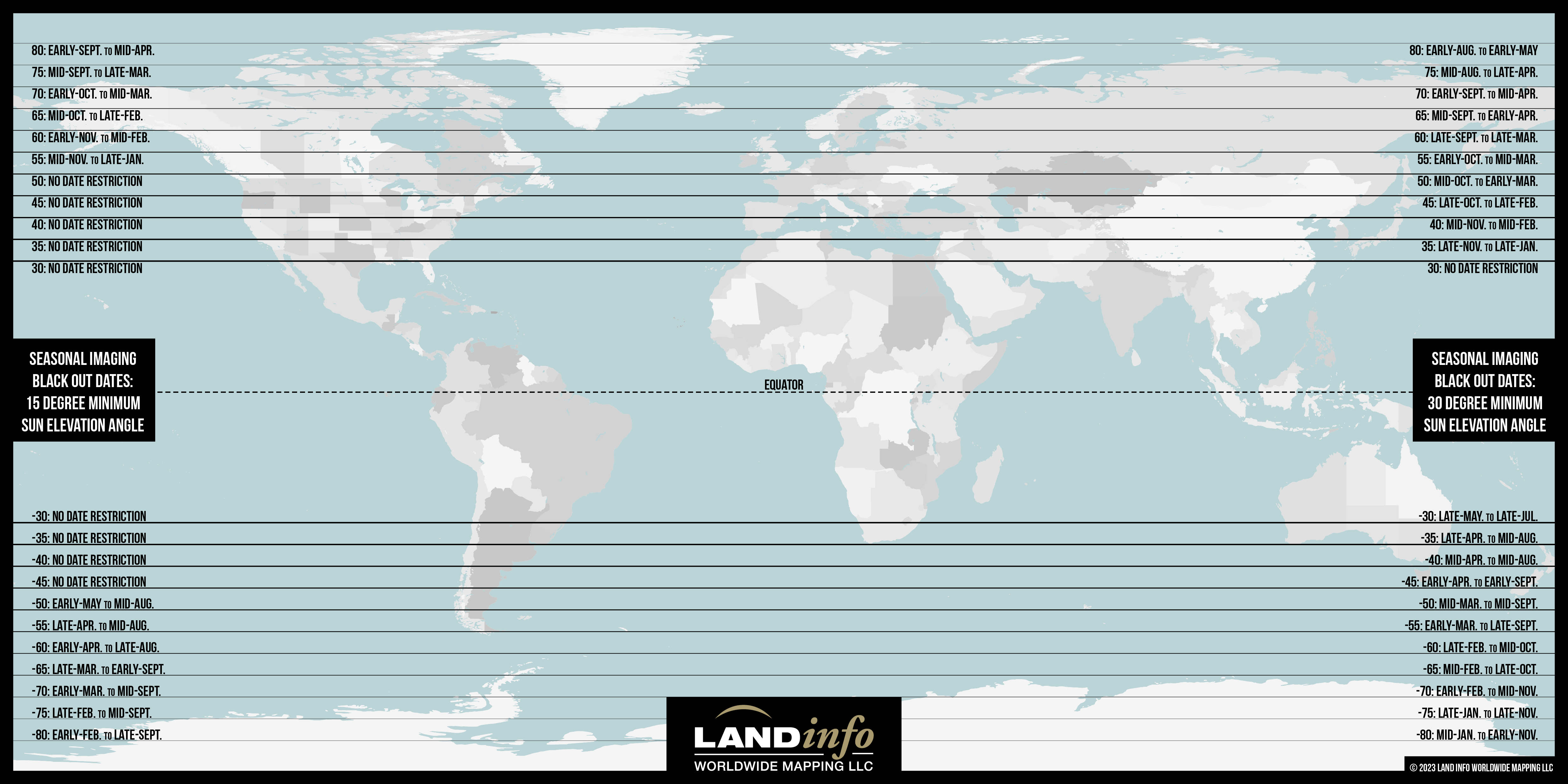
As winter approaches in the Northern hemisphere and the sun appears lower in the sky, our ability to optically image father north latitudes diminishes. This limitation is known as relative blackout, where minimum sun elevation (the angle of the sun above the horizon) needed for quality optical imagery can no longer be supported. Low sun angles increase shadowing by above ground objects and terrain, and may make imagery too dark to be usable. 30 degrees is generally considered to be a minimum desired sun elevation angle (and even that can be low, especially in areas with tall buildings or high relief), but 15 degrees will work for some projects. Increased shadowing is especially problematic with more demanding applications such as classification and stereo elevation extraction. Regions with a short imaging season due to sun angle limitations and snow cover, for example Alaska, will have high competition for satellite time during summer when conditions are optimal. Since seasons in the Southern hemisphere are opposite, as austral summer approaches those far south latitudes have re-opened for optical imaging (seasonal constraints have a larger impact in the Northern hemisphere, which has significantly more land mass in extreme latitudes than the Southern hemisphere.)
While there are fluctuations based off orbit/time-of-day, collection geometry, longitude and actual latitude position, our graphic is intended to give a quick reference — we’re happy to run a refined calculation for a specific area of interest. For some regions the ideal timeframe is to wait as long as possible for last season’s snow to melt, but image before new snow comes.
Sun angle limitations only apply to optical sensors (aerial as well as satellite), which are passive meaning they require light from the sun. All-weather and nighttime imaging are the frequently listed benefits of radar satellites, but as active sensors they are also not constrained by seasonal sun angle limitations — radar can image the globe year-round, as can LiDAR (also an active sensor.)