High-Resolution Global Optical Satellite Imagery
Active satellites (archive/new tasking) including Vantor (formerly Maxar) WorldView-1, WorldView-2, WorldView-3 & GeoEye-1; Airbus Pléiades Neo 3/4 & Pléiades 1A/1B, Planet SkySat and SIIS KOMPSAT & SpaceEye-T.
All six WorldView Legion satellites have successfully launched and achieved full operational capabilities, significantly expanding collection capacity and adding Mid Inclination Orbits (MIO) to support frequent re-visit, including intra-day.
Deprecated satellites (imagery still available from archive) including Vantor (formerly Maxar) IKONOS (1999 – 2015), QuickBird (2001 – 2015) and WorldView-4 (2016 – 2019).
Upcoming satellite constellations including Airbus Pleiades Neo Next, Planet Pelican and KOMPSAT-6/-7/-7A.
Providing a Vast Amount of Information at Competitive Prices
Satellite imagery provides a vast amount of information at competitive prices. New revolutionary technology offers enhanced characteristics such as higher resolution (area represented by a pixel which corresponds to level of detail), native accuracy (the error between an objects position on the image and its real-world position), higher number of multiple multi-spectral bands, improved agility for new collections and extensive archive libraries to greatly increase the feasibility of earth observation projects.
While there isn’t a text-book definition of “high-res” satellite imagery, for practical purposes nowadays it typically means resolution 50m or higher. High-res satellite imagery offers the highest detail and accuracy, it’s usually sold on a per km2 basis where an AOI (Area of Interest) is clipped out of one or more scenes/strips. Traditionally imagery was ordered as a new tasking collection or from archive (if the needed date/image type is in archive with acceptable parameters including cloud-cover) and delivered as a GeoTiff, but access can now also be ordered as a subscription to stream imagery directly to your browser or GIS application.
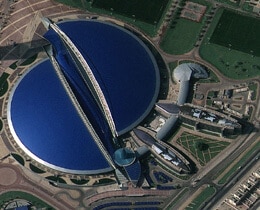
Khalifa Sports City, Doha, Qatar hi res satellite image collected by GeoEye-1 on January 10, 2009. Courtesy of Maxar

Access the links below for detailed information/specifications on industry-leading Vantor (formerly Maxar) WorldView-1, WorldView-2, WorldView-3, WorldView-4, WorldView Legion, GeoEye-1, IKONOS & QuickBird and Airbus Pléiades Neo 3/4 & Pléiades 1A/1B.
Having far surpassed expected mission durations, IKONOS and QuickBird were both decommissioned in 2015, however their archives live on as by far the most extensive from the initial years of commercial high-res spaced-based earth observation.
WorldView-4 satellite successfully launched November 11, 2016 but ceased operations in January 2019 due to failure of the control moment gyros (CMGs)
Contact LAND INFO for a detailed quote with an image search, recommendation, processing options, academic pricing and volume purchase discounts.

Satellite Imagery Products
An authorized distributor of both leading high-res commercial satellite operators: LAND INFO is a Vantor (formerly Maxar) Certified Reseller and an AIRBUS DEFENCE & SPACE Image Partner.
As a Planet Labs (PlanetScope, SkySat, Pelican & RapidEye) Direct Distributor we also offer tasking subscriptions and commercial medium-res imagery with rapid-revisit to support applications such as agriculture and forestry.
We also advise on the use of radar (active) satellites including:
- Capella
- ICEYE
- Umbra
…along with existing and planned hyperspectral satellites:
- Planet Tanager
- Pixxel
- BlackSky Technology
- Orbital Sidekick GHOSt (Global Hyperspectral Observation Satellite)
- Xplore Xcraft
- HySpec IQ
- Hypersat
…and additional new/planned technologies such as SatVu HOTSAT thermal imaging and VLEO (Very Low Earth Orbit) constellations including EOI Space 15 cm.
Visit the Satellite Imagery Pricing page for Detailed Pricing

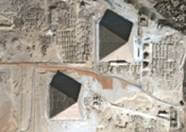

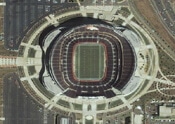
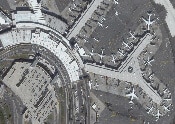



Global Satellite Imagery for a Variety of Professional Applications
Developed during the cold war for military uses, professionals worldwide are now able to take advantage of global satellite imagery for a variety of applications:
- RF planning including 5G wireless and Fixed Wireless Access (FWA
- Vegetation management and wildfire risk analysis/mitigation of overhead electrical utility lines
- Pipeline corridor encroachment detection, asset monitoring
- Emergency response planning
- Disaster recovery
- National security, intelligence and homeland defense
- Port and border enforcement
- Counter narcotics
- Airport mapping
- Urban planning and development, property assessment
- Land-use/cover mapping, planning, change detection and zoning administration
- Impervious surface/irrigation demand mapping for water utilities and stormwater run-off fee assessment
- Alignment engineering – roadways, canals, pipelines
- Natural resources – forestry, petroleum, mining
- Environmental engineering – watersheds, flood-plains, land-cover/vegetation
- Agriculture – precision farming, crop classification, yield assessment
- Commercial/business geography – real estate, tourism, vehicle tracking, industrial espionage
- Insurance – underwriting, claims analysis and risk assessment
- Visualization/Simulation (“Viz/Sim”), gaming and flight simulators
We extensively use the satellites listed on this page for our own value-added mapping/remote sensing projects and will gladly share recommendations.
Our Total Focus on Data
Our total focus on data enables us to help contribute to the success of your projects by providing high-quality mapping and satellite imagery solutions with:
- Competitive Pricing
- Fast Turn-Around Time
- Outstanding Customer Service
Compatible With All Leading CAD, GIS & Remote Sensing Software
Our imagery and map data is compatible with all industry-leading software programs, including:
- Esri ArcGIS/ArcMap
- QGIS
- Blue Marble Geographics Global Mapper
- Google Earth
- NV5 Geospatial Solutions ENVI
- Hexagon ERDAS Imagine, ERDAS ER Mapper
- PCI Geomatica
- Trimble eCognition
- Autodesk AutoCAD
- Bentley Systems MicroStation
- R
- Orfeo ToolBox
- Datum Geospatial (TNTmips/TNTgis/MicroImages)
- ESA Toolboxes / Sentinel Toolbox
- Clark Labs TerrSet (IDRISI)
- GRASS GIS
- SAGA GIS
All trademarks and brand names are property of their respective owners.
High-Resolution Global Satellite Imagery
With an average revisit time of <1 day, WorldView-3 is capable of collecting up to 680,000 km2 per day. WorldView-3 provides 31 cm panchromatic resolution, 1.24 m multispectral resolution, 3.7 m short wave infrared resolution and 30 m CAVIS resolution.
Contact LAND INFO for a new tasking collect quote or archive image search with imagery recommendation, processing options, academic pricing and volume purchase discounts.
Satellite Imagery Pricing

WorldView-3 Satellite Specifications
WorldView-3 Panchromatic Imaging Mode
450 – 800 nm
(or GSD, Ground Sample Distance; off-nadir is geometric mean)
Panchromatic Nadir
20° Off -Nadir
0.31 m
0.34 m
Higher angles selectively available
20 degrees off-nadir or less
WorldView-3 Panchromatic Imaging Mode
Coastal: 400 – 450 nm
Blue: 450 – 510 nm
Green: 510 – 580 nm
Yellow: 585 – 625 nm
Red: 630 – 690 nm
Red Edge: 705 – 745 nm
Near-IR1: 770 – 895 nm
Near-IR2: 860 – 1040 nm
(or GSD, Ground Sample Distance; off-nadir is geometric mean)
Multispectral Nadir
20° Off -Nadir
1.24 m
1.38 m
Higher angles selectively available
20 degrees off-nadir or less
WorldView-3 SWIR Bands
(Short Wave Infrared)
SWIR-2: 1550 – 1590 nm
SWIR-3: 1640 – 1680 nm
SWIR-4: 1710 – 1750 nm
SWIR-5: 2145 – 2185 nm
SWIR-6: 2185 – 2225 nm
SWIR-7: 2235 – 2285 nm
SWIR-8: 2295 – 2365 nm
(or GSD, Ground Sample Distance; off-nadir is geometric mean)
20° Off -Nadir
4.10 m
WorldView-3 CAVIS Bands
(Clouds, Aerosol, Vapor, Ice, Snow)
Aerosol-1: 459 – 509 nm
Green: 525 – 585 nm
Aerosol-2: 635 – 685 nm
Water-1: 845 – 885 nm
Water-2: 897 – 927 nm
Water-3: 930 – 965 nm
NDVI-SWIR: 1220 – 1252 nm
Cirrus: 1365 – 1405 nm
Snow: 1620 – 1680 nm
Aerosol-1: 2105 – 2245 nm
Aerosol-2: 2105 – 2245 nm
(or GSD, Ground Sample Distance; off-nadir is geometric mean)